

Non-Destructive Testing Market to Reach USD 19.2B by 2030 Driven by Industrial Safety & Infrastructure Inspection Demand
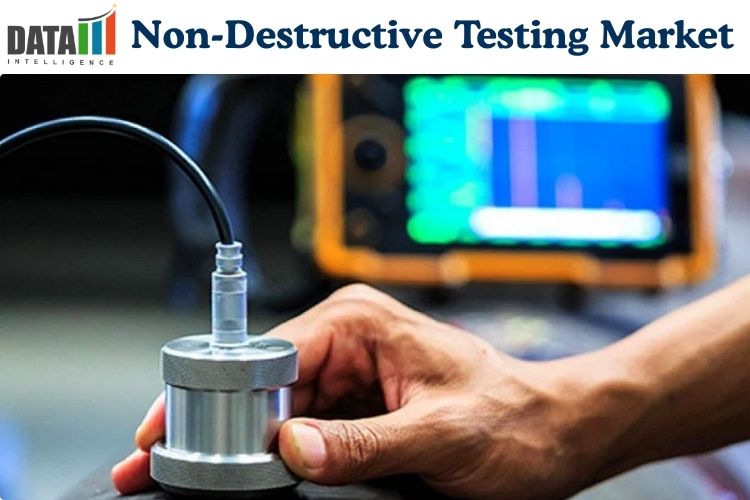
Non-Destructive Testing Market
Increasing investments in infrastructure inspection and industrial quality assurance are fueling growth in the non-destructive testing market globally.
From pipelines to aircraft components, non-destructive testing technologies help industries ensure quality, detect hidden defects early, and support efficient predictive maintenance strategies”
AUSTIN, TX, UNITED STATES, March 11, 2026 /EINPresswire.com/ -- According to DataM Intelligence, the Non-Destructive Testing Market reached USD 9.9 billion in 2022 and is expected to grow to USD 19.2 billion by 2030, expanding at a compound annual growth rate (CAGR) of 10.1% during the forecast period 2024–2031.The increasing focus on industrial safety, infrastructure reliability, and product quality is significantly driving the demand for advanced inspection technologies across multiple sectors. Non-destructive testing (NDT), a critical method used to evaluate materials, components, and structures without causing damage, has become an essential part of modern industrial operations. — DataM Intelligence
Non-destructive testing enables engineers and inspectors to detect defects, cracks, corrosion, or structural weaknesses without affecting the usability of the tested material or equipment. This capability plays a major role in ensuring the safety, performance, and longevity of critical infrastructure and industrial systems. Industries such as oil and gas, aerospace, automotive, manufacturing, construction, and power generation rely heavily on NDT technologies to maintain operational reliability and comply with strict regulatory standards.
As industrial systems become increasingly complex and safety regulations continue to tighten, organizations are adopting advanced NDT techniques to improve inspection efficiency, reduce operational risks, and enhance asset management strategies.
Request Executive Sample: https://www.datamintelligence.com/download-sample/non-destructive-testing-Market
Recent Developments:
February 2026: American Society for Nondestructive Testing released a comprehensive economic impact study highlighting the growing importance of non-destructive testing technologies across industries such as aerospace, oil & gas, and infrastructure. The report emphasized increasing investments in advanced inspection equipment, digital analytics platforms, and workforce training programs to support rising demand for asset integrity management.
January 2026: Several NDT equipment manufacturers introduced next-generation AI-enabled ultrasonic inspection systems designed to improve defect detection accuracy and reduce inspection time in pipelines, pressure vessels, and industrial equipment. These solutions integrate digital imaging, automation, and predictive analytics to enhance inspection reliability and support predictive maintenance strategies.
March 2026: Research and industry demonstrations showcased autonomous drone-based ultrasonic inspection technology capable of performing contact-based NDT in hazardous industrial environments such as storage tanks, tunnels, and offshore structures. This innovation enables safer inspections while reducing the need for human intervention in high-risk areas.
February 2026: Industry technology providers began integrating machine learning algorithms and advanced data analytics into radiographic and ultrasonic testing platforms. These systems allow real-time defect classification, automated reporting, and improved inspection accuracy for manufacturing, aerospace, and energy sector applications.
Increasing Emphasis on Industrial Safety and Infrastructure Integrity:
One of the most significant drivers of the non-destructive testing market is the growing global emphasis on industrial safety and infrastructure reliability. Governments and regulatory agencies worldwide are enforcing stricter safety standards across sectors such as aviation, energy, transportation, and manufacturing. These regulations require regular inspection of equipment, pipelines, structural components, and machinery to prevent catastrophic failures.
Non-destructive testing technologies allow organizations to conduct routine inspections without shutting down operations or dismantling critical equipment. Techniques such as ultrasonic testing, radiographic testing, and magnetic particle testing help detect internal flaws, corrosion, and structural weaknesses before they escalate into serious safety hazards.
Aging infrastructure in many developed economies has also increased the demand for reliable inspection technologies. Bridges, pipelines, power plants, and industrial facilities that have been in operation for decades require regular structural evaluation to ensure continued safety and performance. NDT methods provide an efficient way to monitor the condition of these assets while minimizing operational disruptions.
Request Custom Intelligence Report: https://www.datamintelligence.com/customize/non-destructive-testing-Market
Growing Demand from the Oil and Gas Industry:
The oil and gas industry represents one of the largest end users of non-destructive testing technologies. Exploration, production, refining, and transportation activities involve complex equipment and extensive pipeline networks that must operate under extreme conditions. Regular inspection is essential to detect corrosion, cracks, and material degradation that could lead to leaks, environmental hazards, or costly operational shutdowns.
Non-destructive testing techniques such as ultrasonic testing, eddy current testing, and radiographic inspection are widely used to monitor pipeline integrity, evaluate weld quality, and inspect pressure vessels and storage tanks. These inspections help operators maintain safe operations while complying with stringent regulatory requirements.
The expansion of offshore oil exploration projects and the development of new energy infrastructure are further driving the adoption of advanced NDT solutions. Companies are increasingly investing in automated and robotic inspection systems capable of operating in hazardous environments where manual inspection would be difficult or unsafe.
Rising Adoption in Aerospace and Defense:
The aerospace and defense sector also relies heavily on non-destructive testing to ensure the safety and performance of aircraft and defense equipment. Aircraft components must withstand extreme stress, temperature fluctuations, and vibration during operation. Even minor structural defects can compromise safety, making regular inspection essential.
NDT techniques such as ultrasonic testing, acoustic emission testing, and radiographic testing are used extensively to inspect aircraft fuselage structures, turbine blades, landing gear components, and composite materials. These methods allow engineers to detect microscopic defects that may not be visible through conventional inspection methods.
As global air travel continues to recover and aircraft manufacturing increases, the demand for reliable inspection technologies is expected to rise significantly. Defense organizations also rely on NDT methods to ensure the integrity of military equipment, naval vessels, and advanced weapons systems.
Increasing Role in Manufacturing and Automotive Industries:
Manufacturing industries are adopting non-destructive testing technologies to improve product quality, enhance process reliability, and reduce production defects. Modern manufacturing processes involve advanced materials, high-precision components, and complex assembly systems that require thorough quality control.
In the automotive industry, NDT methods are used to inspect welds, castings, and structural components to ensure compliance with safety standards. As vehicles become more technologically advanced, manufacturers must verify the integrity of critical components such as battery systems, electric drivetrains, and lightweight structural materials.
The shift toward electric vehicles and advanced mobility solutions has further increased the need for reliable inspection technologies capable of analyzing new materials and complex manufacturing processes.
Technological Advancements Enhancing NDT Capabilities:
Technological innovation is playing a key role in expanding the capabilities of non-destructive testing systems. Modern NDT solutions are increasingly integrating digital technologies, automation, and advanced imaging systems to improve inspection accuracy and efficiency.
Advanced ultrasonic testing systems now provide real-time imaging that allows inspectors to visualize internal defects with high precision. Similarly, digital radiography systems have replaced traditional film-based radiography in many applications, offering faster analysis and improved data management capabilities.
Artificial intelligence and machine learning are also beginning to influence NDT operations. AI-powered analysis tools can automatically identify patterns and anomalies in inspection data, enabling faster decision-making and reducing the risk of human error.
Robotic inspection systems are gaining popularity in hazardous environments such as offshore platforms, nuclear facilities, and confined industrial spaces. These robotic solutions allow inspections to be performed remotely, improving worker safety while maintaining inspection accuracy.
Competitive Landscape:
The global non-destructive testing market is highly competitive, with several established companies offering advanced inspection technologies and services. Key players operating in the market include Olympus Corporation, GE Measurement and Control Solutions, Team Inc., Applus Services, Mistras Group Inc., SGS Group, Fujifilm Corporation, Bureau Veritas SA, Nikon Metrology NV, and Intertek Group PLC.
Market Segmentation Overview
By Technique
The market is categorized into ultrasonic testing, visual inspection testing, magnetic particle testing, liquid penetrant testing, eddy current testing, radiographic testing, and acoustic emission testing. Ultrasonic testing holds a significant share due to its ability to detect internal flaws, cracks, and material thickness variations without causing damage to components. Visual inspection testing remains one of the most widely used techniques because of its simplicity, cost-effectiveness, and ability to quickly identify surface defects. Magnetic particle testing is commonly used for detecting surface and near-surface discontinuities in ferromagnetic materials, particularly in heavy industries and manufacturing. Liquid penetrant testing is widely applied to identify surface-breaking defects in metals, plastics, and ceramics. Eddy current testing is used for detecting cracks, corrosion, and conductivity variations in conductive materials, making it valuable in aerospace and automotive sectors. Radiographic testing provides highly accurate internal imaging using X-rays or gamma rays, enabling detailed analysis of structural integrity in critical components. Acoustic emission testing is increasingly used for monitoring structural health in real time, detecting stress waves generated by material deformation or crack growth.
By End User
Based on end user, the market is segmented into oil and gas, manufacturing, aerospace and defense, construction, automotive, and power generation. The oil and gas sector represents a major segment due to the need for continuous inspection of pipelines, storage tanks, and offshore structures to prevent leaks and operational failures. The manufacturing industry widely uses non-destructive testing techniques to ensure product quality, maintain equipment reliability, and comply with safety standards. Aerospace and defense rely heavily on advanced inspection technologies to ensure the structural integrity of aircraft components and defense equipment. The construction industry uses testing techniques to evaluate building materials, structural components, and infrastructure safety. In the automotive sector, non-destructive testing is applied to inspect engine components, welds, and structural parts to maintain quality and safety. The power generation industry also relies on inspection technologies to monitor turbines, boilers, and other critical equipment in thermal, nuclear, and renewable power plants.
Regional Analysis:
Regionally, the market is segmented into North America, Latin America, Europe, Asia Pacific, and the Middle East & Africa. North America holds a significant share due to strong industrial infrastructure, strict safety regulations, and widespread adoption of advanced inspection technologies. Europe follows closely, supported by well-established aerospace, automotive, and manufacturing industries, along with regulatory compliance requirements. The Asia Pacific region is experiencing rapid growth due to expanding industrialization, increasing infrastructure development, and rising demand for quality control in countries such as China, India, and Japan. Latin America is gradually adopting advanced inspection technologies, particularly in the oil and gas and mining sectors. The Middle East & Africa region is also witnessing growth, driven by increasing investments in oil and gas infrastructure, construction projects, and power generation facilities.
Purchase Corporate License | Market Intelligence: https://www.datamintelligence.com/buy-now-page?report=non-destructive-testing-Market
Strategic Outlook
The non-destructive testing market is expected to experience substantial growth over the coming years as industries prioritize safety, operational reliability, and quality assurance. The integration of advanced imaging technologies, automation, artificial intelligence, and robotics is expected to significantly enhance the efficiency and accuracy of inspection processes.
Organizations that adopt advanced NDT technologies will be better positioned to prevent costly equipment failures, improve operational performance, and meet evolving regulatory requirements. As industrial systems continue to grow more complex and global infrastructure ages, the role of non-destructive testing in ensuring safety and structural integrity will become increasingly important.
With strong demand across energy, aerospace, manufacturing, and construction industries, the Non-Destructive Testing Market is poised to remain a critical component of global industrial operations in the years ahead.
Related Reports:
Lidar For Weather Forecasting Market
Network Analysis Market
Sai Kiran
DataM Intelligence 4market Research LLP
+1 877-441-4866
email us here
Visit us on social media:
LinkedIn
YouTube
X
Legal Disclaimer:
EIN Presswire provides this news content "as is" without warranty of any kind. We do not accept any responsibility or liability for the accuracy, content, images, videos, licenses, completeness, legality, or reliability of the information contained in this article. If you have any complaints or copyright issues related to this article, kindly contact the author above.
